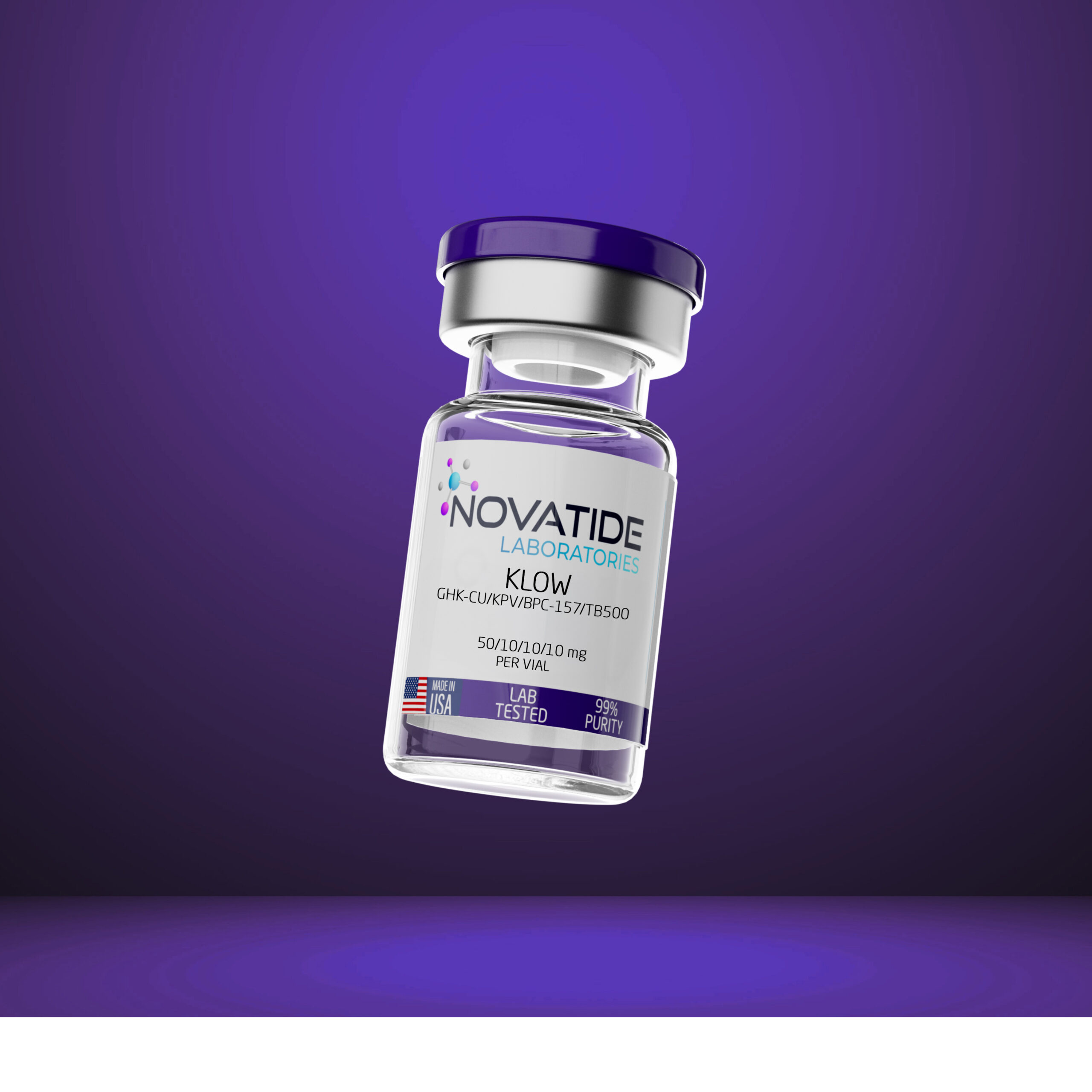
KLOW delivers a next-generation regenerative solution, uniting four potent peptides—GHK-Cu, KPV, BPC-157, and TB-500—into a single synergistic formulation. Together, they support accelerated healing, reduced inflammation, and enhanced tissue regeneration, making KLOW an ideal compound for advanced longevity, recovery, and cellular repair research.
$175.00
This product remains in its original powdered state without being reconstituted.
Free Shipping
Fast Delivery
Real Customer Support
KLOW is a multi-component peptide formulation designed to support tissue regeneration, inflammation control, and cellular repair. It combines four clinically studied peptides—GHK-Cu, KPV, BPC-157, and TB-500—each contributing complementary mechanisms that target healing, recovery, and optimal cellular function.
This synergistic blend represents a comprehensive regenerative approach, addressing both systemic recovery and localized tissue repair through combined effects on angiogenesis, collagen synthesis, and immune modulation.
Key Components & Mechanisms
GHK-Cu (Copper Tripeptide)
Promotes collagen and elastin synthesis for skin, muscle, and connective tissue repair
Enhances angiogenesis and wound healing
Exhibits strong anti-oxidant and anti-inflammatory activity
Supports hair growth, skin rejuvenation, and tissue remodeling
KPV (Lys-Pro-Val)
Potent anti-inflammatory peptide derived from α-MSH (alpha-melanocyte-stimulating hormone)
Inhibits pro-inflammatory cytokines (TNF-α, IL-6)
Helps stabilize gut barrier function and reduce systemic inflammation
BPC-157 (Body Protection Compound-157)
Accelerates muscle, tendon, and ligament healing
Enhances angiogenesis and tissue oxygenation
Protects the gastrointestinal tract and promotes mucosal integrity
Reduces inflammation and oxidative stress in injured tissues
TB-500 (Thymosin Beta-4 Fragment)
Promotes cell migration and differentiation
Stimulates actin regulation for faster cellular movement and tissue recovery
Encourages angiogenesis and wound repair
Reduces fibrosis and supports overall regenerative processes